på Amino

Statistik

Denne profil blev set 12 gange i løbet af de sidste 30 dage.
 

Mit Amino Netværk


Virksomheder jeg følger

Joel Savage følger endnu ingen virksomheder på Amino Bizz

 
Profil

Joel Savage 

Antwerp
0  Indlæg
0  Point

Joel Savage finder du også her:

   Min biografi

Belgian-Ghanaian author Joel Savage contributes to global publications on culture, international issues, climate security, migration, health, and human stories, connecting Africa, Europe, and Asia, delivering clear and accessible insights shaped by cross‑continental experience.


   Skæve facts om mig

Hvornår startede du din første virksomhed og hvad lavede den?
I started my first publishing project in 2014 to share global human‑interest stories.

Hvad er den mærkeligste ting du har på dit kontor?
A small carved wooden figure from Ghana that inspires my writing.

Hvem ville du ønske du var venner med på Facebook?
A respected global journalist who values honest storytelling.

Hvilken forretningside ville du gerne have fundet på?
A page dedicated to cultural journalism and global human stories.

Nævn en ting om dig selv som ville overraske dine medarbejdere/venner:
I can write a full article in one sitting without stopping.

Hvad er det sjoveste der er sket i din virksomhed?
A reader once thought I was running a whole newsroom alone.

Hvis du ikke skulle bekymre dig om penge, hvad lavede du så nu?
Writing full‑time and traveling to document human stories.

Hvad ville du ønske du havde vidst da du startede din virksomhed?
Consistency is more powerful than talent.

Hvis du var diktator, hvad ville du ændre?
I would make access to education and information free for everyone.

Hvad er din Passion/Hobby?
Writing, reading, and cultural research.

Hvad er dit yndlingsmotto?
Truth is the strongest voice.

Hvad er dit bedste forretningsråd til en ny iværksætter?
Start small, stay consistent, and build trust.

Hvad er det dummeste du har gjort?
Working too many hours without rest.

Hvad er din yndlingsfilm?
Mel Gibson's Apocalypto.

Hvordan slapper du bedst af?
Quiet reading and long walks.

Hvad er det bedste du har gjort for din virksomhed det seneste år?
Publishing consistently and expanding my global audience.

   Nyheder
  • 19-09-2026
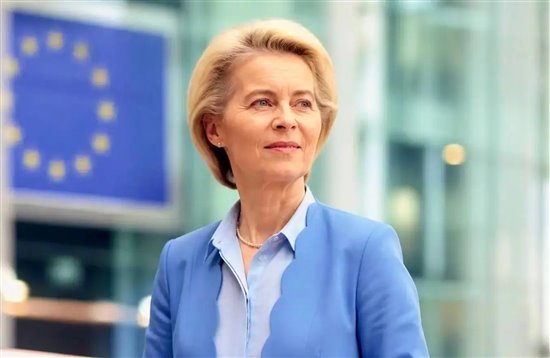
  • Ursula von der Leyen: The Powerful Woman Shaping Europe’s Future

    A photo of Ursula von der Leyen standing confidently in a modern European Union setting.

    Ursula von der Leyen has emerged as one of the most influential women in modern global politics, leading the European Commission with a combination of resilience, strategic clarity, and historic significance.


    As the first woman to hold this office, and recently re‑elected for a second term lasting until 2029, she stands at the center of Europe’s response to some of the most challenging events of the 21st century.


    Her leadership reflects not only political experience but also a deep commitment to the idea of European unity at a time when global instability continues to reshape international relations.


    Her path to power is remarkable. Trained as a physician, von der Leyen transitioned from medicine to politics, rising through Germany’s federal ministries before becoming the country’s first female Minister of Defense.


    This unusual trajectory, from medical practice to high‑level political leadership, has contributed to her reputation as a disciplined, analytical, and determined figure.


    Her long‑standing connection to the Christian Democratic Union and her alignment with former Chancellor Angela Merkel helped shape her political identity, but her influence today extends far beyond national borders.


    Von der Leyen’s presidency has been defined by major policy initiatives that have reshaped the European Union’s priorities. The European Green Deal, one of her flagship projects, aims to make Europe climate‑neutral by 2050 and represents the most ambitious environmental transformation in EU history.


    She also guided the Union through the COVID‑19 pandemic, coordinating vaccine procurement and cross‑border health strategies during a period of unprecedented uncertainty. Her leadership during Russia’s invasion of Ukraine further solidified her role as a central voice for European unity, sanctions, and long‑term security commitments.


    Beyond crisis management, von der Leyen has become a leading advocate for digital regulation and online safety. She has repeatedly warned about the dangers posed by aggressive algorithms, disinformation, and the exploitation of children online, pushing for stronger digital protections across the EU.


    Her speeches often emphasize that Europe must choose “Union” to face global challenges, a message that resonates strongly in an era marked by geopolitical fragmentation and rising authoritarianism.


    Her defense of Greenland: A new front in European Sovereignty


    In recent years, Greenland — a semi‑autonomous territory of Denmark — has become a geopolitical flashpoint due to repeated attempts by U.S. President Donald Trump to assert American control over the island. Von der Leyen responded with unmistakable clarity: Europe stands firmly with Greenland and Denmark.


    During her 2026 visit to Nuuk, she announced a €200 million EU investment package to strengthen Greenland’s infrastructure, education, fisheries, renewable energy, satellite communications, and critical raw materials sectors. She declared that “Greenland can count on the EU”, reaffirming Europe’s commitment to the island’s sovereignty and future.


    Her message was not only economic but deeply political. She emphasized that Greenland’s future belongs to the people of Greenland and Denmark — “no one else.” This stance directly countered Trump’s annexation threats and reinforced the EU’s role as a stabilizing force in the Arctic.


    Von der Leyen’s defense of Greenland also included security cooperation. NATO’s Arctic Shield exercises, involving 10–11 allied nations, coincided with her visit, underscoring Europe’s readiness to protect the region’s strategic interests.


    Her actions positioned Europe as a guardian of Arctic sovereignty, climate stability, and democratic partnership — a role that has elevated her global profile even further.


    Inviting Canada to Join the European Union — A historic proposal


    In her 2026 State of the Union address, von der Leyen made headlines by proposing that Canada become the first associate member of the European Union — a status that does not currently exist under EU treaties.


    Standing alongside Canadian Prime Minister Mark Carney, she argued that Europe must “re‑imagine its partnerships” in a fractured global system. She highlighted the deep alignment between Europe and Canada on climate change, AI governance, Arctic security, democracy, and global trade.


     Her proposal would elevate EU‑Canada relations to their highest level ever, creating new alliances in manufacturing, critical minerals, defense cooperation, and technology.


    Von der Leyen stressed that this partnership was “not against anyone else, but for our common strength.” Her vision reflects a broader strategy: expanding Europe’s circle of democratic allies to reinforce stability in an era of rising geopolitical tension.


    If realized, Canada’s associate membership would mark one of the most significant expansions of European influence in modern history — and it would be credited to von der Leyen’s bold diplomatic imagination.


    A leader redefining Europe’s global role


    Today, Ursula von der Leyen stands as a symbol of European resilience and ambition. She represents the EU at G7, G20, NATO summits, and major diplomatic negotiations, shaping Europe’s global posture with a firm and pragmatic approach.


    Her leadership continues to influence debates on climate, security, digital governance, Arctic sovereignty, and the future of European integration.


    Her defense of Greenland and her invitation to Canada signal a new era in European diplomacy, one defined by strategic alliances, democratic solidarity, and a clear assertion of Europe’s place in the world.


    For many, she embodies the possibility of strong, principled leadership in a world where stability is increasingly difficult to maintain.


    Ursula von der Leyen, EU–Canada partnership, Greenland EU relations, Arctic sovereignty Europe, European Green Deal, features, politics, EU geopolitical strategy, NATO Arctic security


  • 12-09-2026
  • ALS: The silent breakdown of the human body and the search for real solutions

    An illustration showing the human nervous system, highlighting motor neurons affected by ALS, revealing progressive muscle weakness and neurodegeneration.

    Amyotrophic lateral sclerosis (ALS), widely known as Lou Gehrig’s disease, remains one of the most devastating neurodegenerative disorders of our time. It is a fatal condition that gradually destroys the motor neurons responsible for voluntary muscle movement.


    These neurons, located in the brain and spinal cord, are essential for everyday actions such as walking, speaking, swallowing, and breathing. Once they begin to deteriorate, the body slowly loses its ability to function, leading to progressive weakness, muscle twitching, paralysis, and ultimately respiratory failure.


    ALS is classified as a motor neuron disease and presents in two major forms. Sporadic ALS, which accounts for 90 to 95 percent of all cases, appears without any known cause or family history. Familial ALS, representing the remaining 5 to 10 percent, is inherited through specific genetic mutations passed down through families.


    You may also like to read: Nodding Syndrome: The man‑made disease and the deception of science: https://juskosave.blogspot.com/2020/11/nodding-syndrome-man-made-disease.html


    Regardless of the type, the disease follows a relentless path. Symptoms worsen over time, and most patients face significant disability within a few years of diagnosis. Average life expectancy after diagnosis is two to five years, although some individuals live longer depending on progression and available care.


    The early signs of ALS often begin subtly. Patients may notice muscle twitching, stiffness, or weakness in the arms or legs. Over time, these symptoms intensify, making it difficult to walk, lift objects, or perform daily tasks.


    Speech becomes slurred, swallowing becomes challenging, and breathing becomes increasingly difficult as the respiratory muscles weaken. The emotional and psychological burden on patients and families is immense, as the disease strips away independence while leaving the mind fully aware of the body’s decline.


    Despite decades of research, ALS remains incurable. No treatment can reverse the damage once motor neurons begin to die. However, medical science has made progress in slowing the disease’s progression and improving quality of life.


    Medications such as riluzole and edaravone can modestly extend survival or reduce the speed of deterioration. Physical therapy, speech therapy, and respiratory support play crucial roles in maintaining function for as long as possible. Assistive technologies, including mobility devices and communication tools, help patients preserve dignity and autonomy.


    Researchers continue to explore new avenues for treatment, including stem‑cell therapy, gene therapy, and advanced neuroprotective drugs. While none have yet produced a breakthrough, ongoing studies offer hope that future interventions may slow or even halt the progression of ALS.


    Related health article: COVID-19's lingering shadow: Respiratory and cardiac health aftermath: https://juskosave.blogspot.com/2025/12/covid-19s-lingering-shadow-respiratory.html


    Early diagnosis, comprehensive care, and strong support systems remain essential for improving patient outcomes. The search for a solution to ALS is not only a scientific challenge but also a human one. It demands global awareness, increased funding, and a commitment to understanding the complex mechanisms behind neurodegeneration.


    As researchers push forward, patients and families continue to fight with courage, resilience, and hope for a future where ALS is no longer a fatal sentence but a treatable 

  • 08-09-2026
  • After NATO, why does the EU leave Trump in limbo again over Greenland?

    A photo of the European Union headquarters in Brussels with EU flags

    The relationship between the European Union and Donald Trump continues to reveal deep fractures in transatlantic diplomacy. The latest developments show a pattern: when Trump expects support from Europe, the EU responds with caution, independence, and a firm commitment to its own political principles.


    This dynamic has left Trump sitting in limbo more than once, and Greenland has now become the second major disappointment. The first rupture came when Trump called on NATO to assist in the attack on Iran in defense of Israel.


    According to EU officials, Trump launched the operation without informing or consulting them beforehand, a move that violated the alliance’s expectations of coordination and transparency. For the EU, this was not just a procedural failure; it was a breach of trust.


    As a result, European leaders declined to support the operation, leaving Trump isolated at a moment when he expected unified Western backing. Today, the EU has once again made its position unmistakably clear. In the dispute over Greenland, European leaders have stated that they stand firmly behind Denmark.


     Greenland, though geographically distant, remains part of the Kingdom of Denmark, and the EU insists that decisions regarding its future must be made solely by the Danish government. This stance directly counters Trump’s interest in acquiring Greenland, a proposal that had already sparked global debate and diplomatic tension.


    By supporting Denmark’s sovereignty, the EU has delivered a second disappointment to Trump, signaling that Europe will not bend to unilateral American ambitions, especially when they conflict with the principles of territorial integrity and democratic decision‑making.


    The message is simple: the EU will not provide support when Trump bypasses consultation, nor when he challenges the autonomy of its member states. These two episodes reveal a broader shift in global politics.


    The EU is asserting itself as an independent geopolitical actor, unwilling to follow Washington’s lead without alignment in values, process, and strategy. For Trump, this means navigating a Europe that is no longer automatically supportive, but increasingly confident in charting its own course.


    It is time for the United States to recognize that attempting to claim lands, resources, or territories that do not belong to the US, creates anxiety and discomfort across the world.


    Many African nations already struggle against external pressures that hinder their development and expose their resources to exploitation, and the same concerns are shared by developed countries when their sovereignty is challenged.


    The U.S. must give peace and cooperation a chance, because the world is already carrying more than enough suffering.


  • 07-09-2026
  • The human decisions AI must never replace in our rapid tech future:

    An image of a person’s silhouette looking at a bright AI screen, showing the connection between human thinking and artificial intelligence.

    Artificial intelligence has become woven into nearly every aspect of modern life, from healthcare and education to finance, transportation, and communication. As algorithms grow more capable, faster, and more autonomous, a critical question emerges:


    What should humans still control in an AI-powered world? The answer is not simply about limiting machines but about preserving the essential elements of human identity, dignity, and responsibility.


    One of the most important areas humans must continue to guide is ethical decision-making. AI can analyze patterns and predict outcomes, but it cannot feel empathy, understand cultural nuance, or grasp the moral weight of a choice.


    Decisions involving justice, fairness, and human rights must remain firmly in human hands. Machines can support these processes, but they should never replace the moral compass that comes from lived experience.


    Humans must also retain control over creativity and cultural expression. While AI can generate music, art, and literature, it does so by learning from human creations. The spark of originality, the emotional depth, the cultural memory, the personal struggle belong uniquely to people.


    Creativity is not just output; it is identity. Preserving human authorship ensures that culture remains authentic and diverse. Another critical domain is accountability. When AI systems make mistakes, cause harm, or produce biased outcomes, responsibility cannot be assigned to a machine.


    Humans must oversee, audit, and correct AI systems to ensure transparency and fairness. Without human accountability, society risks creating powerful tools with no one to answer for their consequences.


    In addition, humans should maintain control over rights and freedoms. AI-driven surveillance, automated decision-making, and predictive analytics can threaten privacy and autonomy if left unchecked. People must define the boundaries of acceptable use, ensuring that technology enhances life rather than restricts it.


    Finally, humans must guide long-term societal direction. AI can optimize processes, but it cannot envision the future we want to build. Questions about education, employment, governance, and global cooperation require human imagination and values. AI should be a partner, not a ruler, in shaping tomorrow.


    In an AI-powered world, the goal is not to compete with machines but to preserve the human qualities that make life meaningful. By keeping control over ethics, creativity, accountability, rights, and societal vision, humanity ensures that technology remains a tool for progress rather than a force that defines us.

  • 06-09-2026
  • Ethiopia’s ancient written culture and the legacy of its Christian heritage

    Photo: A small bird perched on a blooming flower in the soft morning light, carrying a gentle message of Sunday rest.


    Sundays have always carried a feeling that no other day can replicate: a gentle pause in the rhythm of life, a moment when the world seems to breathe more slowly.


    Even in our fast, digital age, Sunday remains a cultural anchor, a day that reminds us of rest, family, friendship, reflection, and the quiet joy of simply being alive. Yet many people feel that modern life is gradually eroding the meaning of this special day.


    There is a reason Sunday feels different. The streets are quieter, the pace softer, and the atmosphere calmer. For generations, Sunday was the day when families gathered around a shared meal, neighbors visited each other, and communities reconnected.


    It was a day shaped by tradition, church in the morning, family food in the afternoon, and peaceful reflection in the evening. That rhythm created a sense of belonging that defined childhoods and strengthened families.


    But the tradition of the Sunday family meal is disappearing. Work schedules, digital distractions, and modern lifestyles have made it harder for families to sit together at the same table. What used to be a weekly ritual, cooking, sharing stories, laughing, and eating, has become rare.


    Many people now spend their Sundays looking at screens instead of faces. Phones, tablets, and televisions have replaced conversations, and the quiet joy of simply being together is fading. Sunday walks, markets, parks, and long conversations were once part of the day’s charm.


    People strolled without rushing, visited local markets, or sat under trees reflecting on life. These simple activities helped clear the mind and restore emotional balance. Today, many people feel too tired, too busy, or too distracted to enjoy these moments.


    The world has become louder, and Sunday’s gentle silence is harder to find. The psychological value of having one slower day is immense. Humans are not built for constant speed. We need pauses, stillness, and time to reset.


    Sunday provides that reset, a moment to breathe, to think, and to prepare for the week ahead. Without it, stress accumulates, relationships weaken, and life begins to feel like an endless race.


    Yet not everyone experiences Sunday as peaceful. Some people feel “Sunday anxiety,” a sense of unease that arrives as the weekend ends. It is the feeling of unfinished tasks, upcoming responsibilities, or the pressure of Monday.


    This anxiety is becoming more common as modern life becomes more demanding. But even this discomfort shows why Sunday matters: it forces us to confront our pace, our priorities, and our need for balance.


    Different cultures spend Sundays in different ways. In Ghana, Sunday is often filled with church, family meals, and rest. In Europe, it is a day for quiet streets, closed shops, and long walks. In Japan, it is a day for family outings, parks, and reflection.


    Across the world, Sunday has always been a cultural anchor, a reminder that life is not only about work, but also about connection and renewal. What happened to the leisurely Sunday afternoon? The one where people sat outside, listened to music, read newspapers, or simply enjoyed the breeze?


    It still exists, but it competes with technology, deadlines, and the constant pull of digital life. The challenge today is not to abandon technology, but to reclaim Sunday without disconnecting completely. It is about choosing presence over distraction, conversation over scrolling, and rest over rush.


    We still need a day that belongs to us, a day that reminds us to slow down, reconnect, and breathe. Sunday is not just a day on the calendar; it is a feeling, a tradition, and a gentle reminder that life is richer when we pause long enough to appreciate it.

   Gæstebog
Ingen har endnu skrevet i Joel Savage's Gæstebog