på Amino

Joel Savage's Announcements

Antwerp
0  Indlæg
0  Point

Joel Savage finder du også her:
  • 19-09-2026
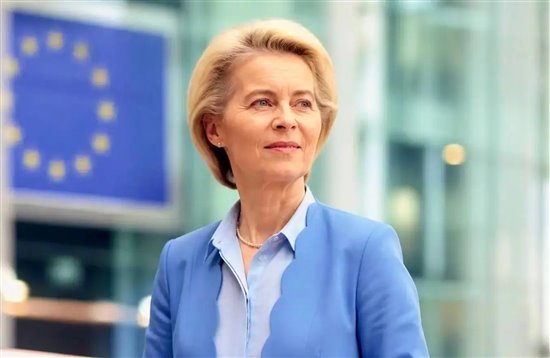
  • Ursula von der Leyen: The Powerful Woman Shaping Europe’s Future

    A photo of Ursula von der Leyen standing confidently in a modern European Union setting.

    Ursula von der Leyen has emerged as one of the most influential women in modern global politics, leading the European Commission with a combination of resilience, strategic clarity, and historic significance.


    As the first woman to hold this office, and recently re‑elected for a second term lasting until 2029, she stands at the center of Europe’s response to some of the most challenging events of the 21st century.


    Her leadership reflects not only political experience but also a deep commitment to the idea of European unity at a time when global instability continues to reshape international relations.


    Her path to power is remarkable. Trained as a physician, von der Leyen transitioned from medicine to politics, rising through Germany’s federal ministries before becoming the country’s first female Minister of Defense.


    This unusual trajectory, from medical practice to high‑level political leadership, has contributed to her reputation as a disciplined, analytical, and determined figure.


    Her long‑standing connection to the Christian Democratic Union and her alignment with former Chancellor Angela Merkel helped shape her political identity, but her influence today extends far beyond national borders.


    Von der Leyen’s presidency has been defined by major policy initiatives that have reshaped the European Union’s priorities. The European Green Deal, one of her flagship projects, aims to make Europe climate‑neutral by 2050 and represents the most ambitious environmental transformation in EU history.


    She also guided the Union through the COVID‑19 pandemic, coordinating vaccine procurement and cross‑border health strategies during a period of unprecedented uncertainty. Her leadership during Russia’s invasion of Ukraine further solidified her role as a central voice for European unity, sanctions, and long‑term security commitments.


    Beyond crisis management, von der Leyen has become a leading advocate for digital regulation and online safety. She has repeatedly warned about the dangers posed by aggressive algorithms, disinformation, and the exploitation of children online, pushing for stronger digital protections across the EU.


    Her speeches often emphasize that Europe must choose “Union” to face global challenges, a message that resonates strongly in an era marked by geopolitical fragmentation and rising authoritarianism.


    Her defense of Greenland: A new front in European Sovereignty


    In recent years, Greenland — a semi‑autonomous territory of Denmark — has become a geopolitical flashpoint due to repeated attempts by U.S. President Donald Trump to assert American control over the island. Von der Leyen responded with unmistakable clarity: Europe stands firmly with Greenland and Denmark.


    During her 2026 visit to Nuuk, she announced a €200 million EU investment package to strengthen Greenland’s infrastructure, education, fisheries, renewable energy, satellite communications, and critical raw materials sectors. She declared that “Greenland can count on the EU”, reaffirming Europe’s commitment to the island’s sovereignty and future.


    Her message was not only economic but deeply political. She emphasized that Greenland’s future belongs to the people of Greenland and Denmark — “no one else.” This stance directly countered Trump’s annexation threats and reinforced the EU’s role as a stabilizing force in the Arctic.


    Von der Leyen’s defense of Greenland also included security cooperation. NATO’s Arctic Shield exercises, involving 10–11 allied nations, coincided with her visit, underscoring Europe’s readiness to protect the region’s strategic interests.


    Her actions positioned Europe as a guardian of Arctic sovereignty, climate stability, and democratic partnership — a role that has elevated her global profile even further.


    Inviting Canada to Join the European Union — A historic proposal


    In her 2026 State of the Union address, von der Leyen made headlines by proposing that Canada become the first associate member of the European Union — a status that does not currently exist under EU treaties.


    Standing alongside Canadian Prime Minister Mark Carney, she argued that Europe must “re‑imagine its partnerships” in a fractured global system. She highlighted the deep alignment between Europe and Canada on climate change, AI governance, Arctic security, democracy, and global trade.


     Her proposal would elevate EU‑Canada relations to their highest level ever, creating new alliances in manufacturing, critical minerals, defense cooperation, and technology.


    Von der Leyen stressed that this partnership was “not against anyone else, but for our common strength.” Her vision reflects a broader strategy: expanding Europe’s circle of democratic allies to reinforce stability in an era of rising geopolitical tension.


    If realized, Canada’s associate membership would mark one of the most significant expansions of European influence in modern history — and it would be credited to von der Leyen’s bold diplomatic imagination.


    A leader redefining Europe’s global role


    Today, Ursula von der Leyen stands as a symbol of European resilience and ambition. She represents the EU at G7, G20, NATO summits, and major diplomatic negotiations, shaping Europe’s global posture with a firm and pragmatic approach.


    Her leadership continues to influence debates on climate, security, digital governance, Arctic sovereignty, and the future of European integration.


    Her defense of Greenland and her invitation to Canada signal a new era in European diplomacy, one defined by strategic alliances, democratic solidarity, and a clear assertion of Europe’s place in the world.


    For many, she embodies the possibility of strong, principled leadership in a world where stability is increasingly difficult to maintain.


    Ursula von der Leyen, EU–Canada partnership, Greenland EU relations, Arctic sovereignty Europe, European Green Deal, features, politics, EU geopolitical strategy, NATO Arctic security


  • 12-09-2026
  • ALS: The silent breakdown of the human body and the search for real solutions

    An illustration showing the human nervous system, highlighting motor neurons affected by ALS, revealing progressive muscle weakness and neurodegeneration.

    Amyotrophic lateral sclerosis (ALS), widely known as Lou Gehrig’s disease, remains one of the most devastating neurodegenerative disorders of our time. It is a fatal condition that gradually destroys the motor neurons responsible for voluntary muscle movement.


    These neurons, located in the brain and spinal cord, are essential for everyday actions such as walking, speaking, swallowing, and breathing. Once they begin to deteriorate, the body slowly loses its ability to function, leading to progressive weakness, muscle twitching, paralysis, and ultimately respiratory failure.


    ALS is classified as a motor neuron disease and presents in two major forms. Sporadic ALS, which accounts for 90 to 95 percent of all cases, appears without any known cause or family history. Familial ALS, representing the remaining 5 to 10 percent, is inherited through specific genetic mutations passed down through families.


    You may also like to read: Nodding Syndrome: The man‑made disease and the deception of science: https://juskosave.blogspot.com/2020/11/nodding-syndrome-man-made-disease.html


    Regardless of the type, the disease follows a relentless path. Symptoms worsen over time, and most patients face significant disability within a few years of diagnosis. Average life expectancy after diagnosis is two to five years, although some individuals live longer depending on progression and available care.


    The early signs of ALS often begin subtly. Patients may notice muscle twitching, stiffness, or weakness in the arms or legs. Over time, these symptoms intensify, making it difficult to walk, lift objects, or perform daily tasks.


    Speech becomes slurred, swallowing becomes challenging, and breathing becomes increasingly difficult as the respiratory muscles weaken. The emotional and psychological burden on patients and families is immense, as the disease strips away independence while leaving the mind fully aware of the body’s decline.


    Despite decades of research, ALS remains incurable. No treatment can reverse the damage once motor neurons begin to die. However, medical science has made progress in slowing the disease’s progression and improving quality of life.


    Medications such as riluzole and edaravone can modestly extend survival or reduce the speed of deterioration. Physical therapy, speech therapy, and respiratory support play crucial roles in maintaining function for as long as possible. Assistive technologies, including mobility devices and communication tools, help patients preserve dignity and autonomy.


    Researchers continue to explore new avenues for treatment, including stem‑cell therapy, gene therapy, and advanced neuroprotective drugs. While none have yet produced a breakthrough, ongoing studies offer hope that future interventions may slow or even halt the progression of ALS.


    Related health article: COVID-19's lingering shadow: Respiratory and cardiac health aftermath: https://juskosave.blogspot.com/2025/12/covid-19s-lingering-shadow-respiratory.html


    Early diagnosis, comprehensive care, and strong support systems remain essential for improving patient outcomes. The search for a solution to ALS is not only a scientific challenge but also a human one. It demands global awareness, increased funding, and a commitment to understanding the complex mechanisms behind neurodegeneration.


    As researchers push forward, patients and families continue to fight with courage, resilience, and hope for a future where ALS is no longer a fatal sentence but a treatable 

  • 08-09-2026
  • After NATO, why does the EU leave Trump in limbo again over Greenland?

    A photo of the European Union headquarters in Brussels with EU flags

    The relationship between the European Union and Donald Trump continues to reveal deep fractures in transatlantic diplomacy. The latest developments show a pattern: when Trump expects support from Europe, the EU responds with caution, independence, and a firm commitment to its own political principles.


    This dynamic has left Trump sitting in limbo more than once, and Greenland has now become the second major disappointment. The first rupture came when Trump called on NATO to assist in the attack on Iran in defense of Israel.


    According to EU officials, Trump launched the operation without informing or consulting them beforehand, a move that violated the alliance’s expectations of coordination and transparency. For the EU, this was not just a procedural failure; it was a breach of trust.


    As a result, European leaders declined to support the operation, leaving Trump isolated at a moment when he expected unified Western backing. Today, the EU has once again made its position unmistakably clear. In the dispute over Greenland, European leaders have stated that they stand firmly behind Denmark.


     Greenland, though geographically distant, remains part of the Kingdom of Denmark, and the EU insists that decisions regarding its future must be made solely by the Danish government. This stance directly counters Trump’s interest in acquiring Greenland, a proposal that had already sparked global debate and diplomatic tension.


    By supporting Denmark’s sovereignty, the EU has delivered a second disappointment to Trump, signaling that Europe will not bend to unilateral American ambitions, especially when they conflict with the principles of territorial integrity and democratic decision‑making.


    The message is simple: the EU will not provide support when Trump bypasses consultation, nor when he challenges the autonomy of its member states. These two episodes reveal a broader shift in global politics.


    The EU is asserting itself as an independent geopolitical actor, unwilling to follow Washington’s lead without alignment in values, process, and strategy. For Trump, this means navigating a Europe that is no longer automatically supportive, but increasingly confident in charting its own course.


    It is time for the United States to recognize that attempting to claim lands, resources, or territories that do not belong to the US, creates anxiety and discomfort across the world.


    Many African nations already struggle against external pressures that hinder their development and expose their resources to exploitation, and the same concerns are shared by developed countries when their sovereignty is challenged.


    The U.S. must give peace and cooperation a chance, because the world is already carrying more than enough suffering.


  • 07-09-2026
  • The human decisions AI must never replace in our rapid tech future:

    An image of a person’s silhouette looking at a bright AI screen, showing the connection between human thinking and artificial intelligence.

    Artificial intelligence has become woven into nearly every aspect of modern life, from healthcare and education to finance, transportation, and communication. As algorithms grow more capable, faster, and more autonomous, a critical question emerges:


    What should humans still control in an AI-powered world? The answer is not simply about limiting machines but about preserving the essential elements of human identity, dignity, and responsibility.


    One of the most important areas humans must continue to guide is ethical decision-making. AI can analyze patterns and predict outcomes, but it cannot feel empathy, understand cultural nuance, or grasp the moral weight of a choice.


    Decisions involving justice, fairness, and human rights must remain firmly in human hands. Machines can support these processes, but they should never replace the moral compass that comes from lived experience.


    Humans must also retain control over creativity and cultural expression. While AI can generate music, art, and literature, it does so by learning from human creations. The spark of originality, the emotional depth, the cultural memory, the personal struggle belong uniquely to people.


    Creativity is not just output; it is identity. Preserving human authorship ensures that culture remains authentic and diverse. Another critical domain is accountability. When AI systems make mistakes, cause harm, or produce biased outcomes, responsibility cannot be assigned to a machine.


    Humans must oversee, audit, and correct AI systems to ensure transparency and fairness. Without human accountability, society risks creating powerful tools with no one to answer for their consequences.


    In addition, humans should maintain control over rights and freedoms. AI-driven surveillance, automated decision-making, and predictive analytics can threaten privacy and autonomy if left unchecked. People must define the boundaries of acceptable use, ensuring that technology enhances life rather than restricts it.


    Finally, humans must guide long-term societal direction. AI can optimize processes, but it cannot envision the future we want to build. Questions about education, employment, governance, and global cooperation require human imagination and values. AI should be a partner, not a ruler, in shaping tomorrow.


    In an AI-powered world, the goal is not to compete with machines but to preserve the human qualities that make life meaningful. By keeping control over ethics, creativity, accountability, rights, and societal vision, humanity ensures that technology remains a tool for progress rather than a force that defines us.

  • 06-09-2026
  • Ethiopia’s ancient written culture and the legacy of its Christian heritage

    Photo: A small bird perched on a blooming flower in the soft morning light, carrying a gentle message of Sunday rest.


    Sundays have always carried a feeling that no other day can replicate: a gentle pause in the rhythm of life, a moment when the world seems to breathe more slowly.


    Even in our fast, digital age, Sunday remains a cultural anchor, a day that reminds us of rest, family, friendship, reflection, and the quiet joy of simply being alive. Yet many people feel that modern life is gradually eroding the meaning of this special day.


    There is a reason Sunday feels different. The streets are quieter, the pace softer, and the atmosphere calmer. For generations, Sunday was the day when families gathered around a shared meal, neighbors visited each other, and communities reconnected.


    It was a day shaped by tradition, church in the morning, family food in the afternoon, and peaceful reflection in the evening. That rhythm created a sense of belonging that defined childhoods and strengthened families.


    But the tradition of the Sunday family meal is disappearing. Work schedules, digital distractions, and modern lifestyles have made it harder for families to sit together at the same table. What used to be a weekly ritual, cooking, sharing stories, laughing, and eating, has become rare.


    Many people now spend their Sundays looking at screens instead of faces. Phones, tablets, and televisions have replaced conversations, and the quiet joy of simply being together is fading. Sunday walks, markets, parks, and long conversations were once part of the day’s charm.


    People strolled without rushing, visited local markets, or sat under trees reflecting on life. These simple activities helped clear the mind and restore emotional balance. Today, many people feel too tired, too busy, or too distracted to enjoy these moments.


    The world has become louder, and Sunday’s gentle silence is harder to find. The psychological value of having one slower day is immense. Humans are not built for constant speed. We need pauses, stillness, and time to reset.


    Sunday provides that reset, a moment to breathe, to think, and to prepare for the week ahead. Without it, stress accumulates, relationships weaken, and life begins to feel like an endless race.


    Yet not everyone experiences Sunday as peaceful. Some people feel “Sunday anxiety,” a sense of unease that arrives as the weekend ends. It is the feeling of unfinished tasks, upcoming responsibilities, or the pressure of Monday.


    This anxiety is becoming more common as modern life becomes more demanding. But even this discomfort shows why Sunday matters: it forces us to confront our pace, our priorities, and our need for balance.


    Different cultures spend Sundays in different ways. In Ghana, Sunday is often filled with church, family meals, and rest. In Europe, it is a day for quiet streets, closed shops, and long walks. In Japan, it is a day for family outings, parks, and reflection.


    Across the world, Sunday has always been a cultural anchor, a reminder that life is not only about work, but also about connection and renewal. What happened to the leisurely Sunday afternoon? The one where people sat outside, listened to music, read newspapers, or simply enjoyed the breeze?


    It still exists, but it competes with technology, deadlines, and the constant pull of digital life. The challenge today is not to abandon technology, but to reclaim Sunday without disconnecting completely. It is about choosing presence over distraction, conversation over scrolling, and rest over rush.


    We still need a day that belongs to us, a day that reminds us to slow down, reconnect, and breathe. Sunday is not just a day on the calendar; it is a feeling, a tradition, and a gentle reminder that life is richer when we pause long enough to appreciate it.

  • Why Sundays still matter: Reclaiming time for rest, family and joy

    Photo: A small bird perched on a blooming flower in the soft morning light, carrying a gentle message of Sunday rest.


    Sundays have always carried a feeling that no other day can replicate: a gentle pause in the rhythm of life, a moment when the world seems to breathe more slowly.


    Even in our fast, digital age, Sunday remains a cultural anchor, a day that reminds us of rest, family, friendship, reflection, and the quiet joy of simply being alive. Yet many people feel that modern life is gradually eroding the meaning of this special day.


    There is a reason Sunday feels different. The streets are quieter, the pace softer, and the atmosphere calmer. For generations, Sunday was the day when families gathered around a shared meal, neighbors visited each other, and communities reconnected.


    It was a day shaped by tradition, church in the morning, family food in the afternoon, and peaceful reflection in the evening. That rhythm created a sense of belonging that defined childhoods and strengthened families.


    But the tradition of the Sunday family meal is disappearing. Work schedules, digital distractions, and modern lifestyles have made it harder for families to sit together at the same table. What used to be a weekly ritual, cooking, sharing stories, laughing, and eating, has become rare.


    Many people now spend their Sundays looking at screens instead of faces. Phones, tablets, and televisions have replaced conversations, and the quiet joy of simply being together is fading. Sunday walks, markets, parks, and long conversations were once part of the day’s charm.


    People strolled without rushing, visited local markets, or sat under trees reflecting on life. These simple activities helped clear the mind and restore emotional balance. Today, many people feel too tired, too busy, or too distracted to enjoy these moments.


    The world has become louder, and Sunday’s gentle silence is harder to find. The psychological value of having one slower day is immense. Humans are not built for constant speed. We need pauses, stillness, and time to reset.


    Sunday provides that reset, a moment to breathe, to think, and to prepare for the week ahead. Without it, stress accumulates, relationships weaken, and life begins to feel like an endless race.


    Yet not everyone experiences Sunday as peaceful. Some people feel “Sunday anxiety,” a sense of unease that arrives as the weekend ends. It is the feeling of unfinished tasks, upcoming responsibilities, or the pressure of Monday.


    This anxiety is becoming more common as modern life becomes more demanding. But even this discomfort shows why Sunday matters: it forces us to confront our pace, our priorities, and our need for balance.


    Different cultures spend Sundays in different ways. In Ghana, Sunday is often filled with church, family meals, and rest. In Europe, it is a day for quiet streets, closed shops, and long walks. In Japan, it is a day for family outings, parks, and reflection.


    Across the world, Sunday has always been a cultural anchor, a reminder that life is not only about work, but also about connection and renewal. What happened to the leisurely Sunday afternoon? The one where people sat outside, listened to music, read newspapers, or simply enjoyed the breeze?


    It still exists, but it competes with technology, deadlines, and the constant pull of digital life. The challenge today is not to abandon technology, but to reclaim Sunday without disconnecting completely. It is about choosing presence over distraction, conversation over scrolling, and rest over rush.


    We still need a day that belongs to us, a day that reminds us to slow down, reconnect, and breathe. Sunday is not just a day on the calendar; it is a feeling, a tradition, and a gentle reminder that life is richer when we pause long enough to appreciate it.

  • 03-09-2026
  • Children shot in Gaza: Why child casualties demand global action

    An image of injured Palestinian children receiving emergency treatment in an overcrowded Gaza hospital, showing trauma, vulnerability, and the urgent need for global protection.


    Children in Gaza are being shot, injured, and killed in a conflict they neither chose nor understand. Hospitals report rising numbers of children with gunshot wounds, many arriving without parents, many treated in chaotic conditions with limited supplies.


    In every war, children are supposed to be protected, yet in Gaza they have become some of the most frequent victims. Their suffering exposes a humanitarian crisis that demands global attention.


    Doctors in Gaza describe scenes of unimaginable trauma: children with bullet injuries to the legs, arms, chest, and head; children undergoing emergency surgery without anesthesia; children crying for parents who may never return.


    Medical teams are overwhelmed, working in damaged hospitals with limited electricity, scarce medicine, and no safe shelter. These wounds are not only physical, they leave deep psychological scars that will shape the rest of these children’s lives.


    International humanitarian organizations, including UNICEF, WHO, and Doctors Without Borders, have repeatedly warned that children in Gaza are being harmed at unprecedented levels.


    They emphasize that children must never be targets, and that shooting children violates international humanitarian law. Yet the violence continues, and the world’s response remains painfully slow.


    The moral question confronting the global community is simple: Why are children being shot, and why is the world failing to protect them? This is not a political debate, it is a human‑rights emergency. Every child, regardless of nationality, religion, or geography, deserves safety, dignity, and the chance to grow without fear.


    For decades, the United States has been one of Israel’s strongest allies, providing military, financial, and diplomatic support. This long‑standing relationship raises a difficult and unavoidable question: What is America’s moral responsibility when children are being shot in Gaza?


    Human‑rights advocates argue that any nation supporting a military power must also uphold accountability, especially when children are harmed. Others insist that geopolitical alliances should not overshadow humanitarian obligations.


    The world cannot ignore the suffering of Gaza’s children. Their injuries, trauma, and deaths are not statistics, they are human lives cut short or forever changed. Protecting children must be a universal priority, and silence in the face of their suffering is a failure of global conscience.


    Why shooting children is a crime, and what must be done


    Shooting children is a crime because international humanitarian law explicitly protects them. The Geneva Conventions classify the targeting of children as a grave breach, and the Convention on the Rights of the Child affirms that every child has the right to life, protection, and security.


    Children are civilians. They are not combatants. They cannot defend themselves. Any act of violence against them is a violation of human rights and a crime under international law. Impunity for harming children creates a dangerous precedent: it signals that the world is willing to tolerate the killing of the most vulnerable.


    When children are shot without accountability, humanity itself is diminished. The international community must demand independent investigations, enforce accountability mechanisms, and ensure that those responsible for harming children face justice.


    Nations that provide military support must insist on strict adherence to international law. Humanitarian corridors must be protected, hospitals must not be attacked, and children must be shielded from violence at all costs.


    Protecting children is not optional; it is a moral obligation. Ending impunity is the first step toward ending the cycle of violence. The world must act now, because every child’s life is precious, and every child deserves a future free from fear.

  • 29-08-2026
  • Why we miss the past: Nostalgia, memory and the life we left behind

    A soft, nostalgic image of old handwritten letters, vintage photographs, cassette tapes, and childhood toys arranged on a wooden table, bringing memories and the beauty of the past.


    There are moments when the past feels closer than the present; a scent, a song, a photograph, or a quiet Sunday afternoon can pull us back into a world that once felt simple, warm, and beautifully human.


    Nostalgia is not just memory; it is emotion, identity, and the longing for a time when life moved slower and connections felt deeper. As the world becomes faster, louder, and more digital, many people find themselves missing the small, ordinary things that once shaped their lives.


    You may also like to read: When a Bonanza star died: The childhood shock that stayed with me

    https://juskosave.blogspot.com/2026/02/when-bonanza-star-died-childhood-shock.html


    Handwritten letters were once the heartbeat of communication. The excitement of seeing your name on an envelope, the familiar handwriting, the anticipation of opening it, these moments carried a kind of intimacy that digital messages can never replace.


    Old photographs, faded and slightly torn at the edges, remind us of childhood smiles, family gatherings, and friendships that shaped who we are. They capture emotions that no smartphone filter can recreate.


    Childhood games brought joy without screens or apps. We played in open fields, on dusty streets, and in neighborhoods where everyone knew each other. Vinyl records and cassette tapes offered a different kind of music experience, one that required patience, care, and appreciation.


    The crackle of a record or the click of a cassette was part of the magic, a reminder that music was once something touched, not just streamed. Traditional markets were full of life, color, and human connection. The smell of spices, the sound of bargaining, the laughter of traders, these were experiences that shaped our communities.


    Street food was not just food; it was culture, identity, and comfort. Family gatherings brought generations together, creating memories that still warm our hearts today. Old cinemas offered a sense of wonder, where watching a film felt like entering another world, not just clicking a button on a streaming app.


    Another interesting related article: Pippi Longstocking: From childhood icon to timeless cultural legend

    https://juskosave.blogspot.com/2013/02/pippi-longstockings-beautiful-chapters.html


    Newspapers and magazines were once our window to the world. The rustle of paper, the smell of fresh print, and the ritual of reading every page made information feel personal. Traveling without smartphones meant discovering places with curiosity, asking strangers for directions, and getting lost in the beauty of the unknown.


    Neighborhood friendships were built on trust, shared meals, and long conversations, not on social media likes. Sunday afternoons carried a special kind of peace. They were slow, gentle, and filled with rest. Childhood toys were treasures that sparked imagination, not just entertainment.


    Perhaps one of the most beautiful memories of all was the excitement of receiving a physical letter, a moment that made you feel seen, valued, and connected. We miss the past not because life was perfect, but because it was human. It was filled with touch, presence, and real connection.


    Read more interesting child memories articles: The pride of our generation as obedient children

    https://juskosave.blogspot.com/2016/04/the-pride-of-our-generation-as-obedient.html


    Nostalgia reminds us that the things we cherish most are often the simplest: time with loved ones, handwritten words, shared meals, familiar streets, and the innocence of childhood. In remembering the past, we rediscover the parts of ourselves that the modern world sometimes makes us forget.


  • 27-08-2026
  • Climate change reshapes global power, wealth, energy and security now!

    A photo showing global maps, energy infrastructure and mineral resources, demonstrating how climate change is reshaping power, wealth and security worldwide.


    Climate change is no longer just an environmental challenge managed by climate ministries and international conferences. It has become a geopolitical force that is reshaping global power, wealth, energy systems and national security.


    The real question confronting governments today is not simply how to reduce emissions, but who will control the resources, technologies and infrastructure needed to survive and prosper in a warming world. The energy transition is already influencing trade, industrial policy, military strategy and international competition.


    One of the most dramatic shifts is the rise of critical minerals as strategic assets. Lithium, cobalt, nickel, copper, graphite and rare earth elements now underpin batteries, electric vehicles, renewable‑energy systems and digital technologies. These minerals are becoming as important to the 21st century as oil was to the 20th.


    This raises a powerful question: Will traditional oil‑and‑gas powers remain dominant, or will countries controlling critical minerals and green technology become the new global leaders? Analysts increasingly describe the global race for critical minerals as a new geopolitical competition.


    Africa sits at the center of this emerging struggle. The continent holds enormous quantities of minerals required for the global energy transition. Yet historically, African nations have exported raw materials while importing finished products, a model that enriches others while limiting local industrial development.


    The key question is whether Africa will repeat this old pattern or finally transform its natural wealth into industrial power. The answer will determine whether Africa becomes one of the biggest winners or one of the biggest losers in the new climate‑driven global order.


    Meanwhile, China, the United States and Europe are locked in a fierce competition for leadership in the green economy. They are racing to control batteries, electric vehicles, solar manufacturing, critical minerals, electricity grids, artificial intelligence for energy management, green hydrogen and advanced nuclear technology.


    The energy transition is no longer just about climate goals, it is about industrial dominance, technological superiority and geopolitical influence. Climate change is also redefining the meaning of energy security, as for decades, energy security meant access to oil and gas.


    Today, it includes electricity, batteries, minerals, renewable technology, storage and resilient grids. A 2026 report notes that energy security and affordability are increasingly taking priority in global policy, while the 1.5°C target is becoming harder to achieve.


    Nations are preparing for a future where energy systems must withstand extreme weather, cyber threats and geopolitical shocks. The Arctic is emerging as a new geopolitical battleground, as sea ice retreats, previously inaccessible shipping routes are opening, creating new opportunities for trade, resource extraction and military positioning.


    A 2026 study highlights how climate‑induced Arctic Sea‑ice retreat is increasing the strategic importance of the Northern Sea Route, drawing interest from major powers seeking influence in the region.


    Greenland offers another striking example of climate and geopolitics colliding. Melting ice is exposing mineral resources, altering shipping routes and increasing the island’s strategic value. Analysts describe Greenland as an “eco‑geopolitical frontier,” where environmental change intersects with national security, resource competition and global power dynamics.


    The world’s oceans are also becoming strategic territory, while climate change is altering fisheries, shipping routes, coastal economies and access to marine resources. Since oceans carry roughly 90% of global trade, their changing conditions have enormous geopolitical implications.


    Nations are increasingly viewing the oceans not just as ecological spaces, but as arenas of economic and strategic competition. Small island nations, despite contributing little to global emissions, face some of the greatest climate risks.


    Their vulnerability raises uncomfortable questions about climate justice: Why should countries with the least historical responsibility bear the greatest consequences? This leads directly into debates about international finance, adaptation funding and the unequal distribution of power in global climate negotiations.


    Climate migration is another force reshaping global politics. Rising temperatures, drought, flooding, food insecurity and coastal erosion are influencing where people live and how societies function. Climate change is affecting borders, urbanization, employment, food prices, political stability and international aid.


    It is becoming not just an environmental issue, but a human‑security issue with far‑reaching consequences. At the heart of all these changes lies the question of climate justice.


    Developing countries argue that wealthy industrialized nations built enormous wealth through fossil‑fuel development, while poorer nations are now being asked to decarbonize under far more difficult economic conditions.


    This tension is central to the future of global cooperation and the legitimacy of international climate policy. The climate transition is creating a new economic and geopolitical map of the world.


    The next global power struggle may not be fought only over oil fields or military territory. It may increasingly be fought over minerals, electricity, technology, water, shipping routes and the ability to adapt to climate change.


    The countries that control energy, minerals, technology, manufacturing, finance and infrastructure will have disproportionate influence over the next global order. Climate change is not just reshaping the planet, it is reshaping power itself.

  • 25-08-2026
  • Gaza’s children & mothers: Amputations, unsafe births, and the silent global failure

    Photo: A scene showing amputee Palestinian children and a sad pregnant woman in Gaza receiving limited medical care amid rubble and global neglect.


    Gaza today stands as one of the most dangerous places in the world for children and pregnant women, with two overlapping humanitarian catastrophes unfolding simultaneously.


    On one side, hundreds of children have lost limbs in the conflict, and on the other, pregnant women face life‑threatening conditions due to the collapse of the healthcare system, severe malnutrition, and relentless bombardment.


    Together, these crises paint a devastating picture of a population struggling to survive under unimaginable circumstances. Gaza hosts the largest group of child amputees in modern history, with estimates ranging from 3,000 to over 4,000 children who have lost one or more limbs since October 2023.


    You may also like to read: Hunger, starvation and death in the Gaza Strip

    https://juskosave.blogspot.com/2025/07/humanity-crisis-hunger-starvation-and.html


    This staggering figure represents nearly a quarter of all amputees in the territory, making Gaza’s per‑capita rate of child limb loss the highest in the world.


    The collapse of the healthcare system and severe shortages of medical supplies have forced doctors to perform amputations without anesthesia, in unsanitary conditions, and often with improvised tools. Many of these surgeries could have been avoided if antibiotics, clean instruments, or proper facilities were available.


    More than ten children lose a limb every day, leaving deep physical and emotional scars. For survivors, the suffering continues long after the operation. Rehabilitation services are virtually nonexistent, and prosthetic limbs cannot be manufactured due to the blockade and lack of raw materials.


    Thousands of children remain without crutches, wheelchairs, or artificial limbs, condemned to immobility, chronic pain, and isolation. Many experience depression, anxiety, and trauma, unable to attend school or move safely through rubble‑strewn camps. Families face impossible choices between seeking medical help and staying safe from bombardment, while international aid remains slow and fragmented.


    At the same time, Palestinian pregnant women in Gaza face life‑threatening risks that have intensified dramatically. As of August 2026, approximately 50,000 women are pregnant in the enclave, with miscarriage rates more than tripling compared to late 2025.


    Related article: Why Al Jazeera journalists are being killed

    https://juskosave.blogspot.com/2026/05/why-al-jazeera-journalists-are-being.html


    Extreme stress, shock, malnutrition, and the near‑total collapse of medical care have created conditions where pregnancy itself has become perilous. Only a fraction of hospitals remain partially functional, forcing many women to give birth in tents, ruins, or overcrowded shelters without midwives or anesthesia.


    Doctors report credible cases of women undergoing C‑sections without anesthesia, and premature babies are sometimes placed five at a time in a single incubator, drastically reducing survival rates, and malnutrition has become one of the most severe threats.


    Over 155,000 pregnant and breastfeeding women face acute food insecurity, leading to spikes in low birth weight, stillbirths, and life‑threatening complications. The blockade has left women without access to protein, vitamins, or clean water, making safe pregnancy nearly impossible.


    In Israeli prisons such as Damon Prison, pregnant Palestinian women endure overcrowding, sleeping on floors, and limited access to medical care or nutritious food, placing both mother and child at extreme risk, while the world’s silence remains deafening.


    If such suffering were inflicted upon Israeli children or mothers, global outrage would be immediate and overwhelming. Yet Palestinian children and women endure these horrors largely unseen, their pain buried beneath political debates and shifting headlines. The question persists: how long will the world watch without acting?


    More related article: The uncertain future of the Palestinian children

    https://juskosave.blogspot.com/2026/04/the-future-of-palestinian-children.html


    Gaza’s amputee children and pregnant women represent a humanitarian emergency that transcends politics. Their suffering demands compassion, medical support, and global accountability. Every lost limb, every unsafe birth, and every preventable death is a reminder of the world’s failure to protect its most vulnerable. Silence is complicity; action is humanity.

  • 21-08-2026
  • George William Gordon: The Martyr who challenged colonial injustice

    An illustration of the George William Gordon monument in Jamaica.


    Many things inspire writers, and it is always fascinating when they share the source of that inspiration. For me, music has long been one of the strongest forces behind my pen. Listening to Billy Joel’s “Honesty” once pushed me to write the article, “Honesty is mostly what I need from you – Billy Joel.”

    https://juskosave.blogspot.com/2025/07/honesty-is-mostly-what-i-need-from-you.html


    The same happened with Joseph Hill of Culture, Anthony B, and Lucky Dube; their lyrics carried messages so powerful that I felt compelled to write articles about their reflections. Music, especially conscious reggae, has a way of awakening the spirit and directing the mind toward truth.


    History repeated itself recently when I was listening to Joseph Hill’s song “Innocent Blood” from the album Cumbolo. In the song, Hill recounts a moment after slavery when the people of Jamaica were suffering from pox. He sang that George William Gordon, then Justice of the Peace at Morant Bay, sent doctors and friends abroad to help the afflicted.


    According to Hill, Gordon’s compassion and leadership were so effective that he became a threat to the colonial establishment, and for that, he was arrested and hanged. Hill concluded with a striking reminder: “If you think I am lying, take a look upon the $10 bill.” Indeed, George William Gordon’s face appeared on Jamaica’s $10 bill, both on the banknote and on the $10 coin.


    I had listened to this song countless times since the eighties, but this time, something stirred deeper. I felt compelled to look into the background of the man Joseph Hill called by name, the man whose face appears on Jamaica’s ten‑dollar note. That curiosity led me to rediscover one of the most significant figures in Caribbean history: George William Gordon.


    Listening to Lucky Dube’s lyrics inspired me to write all the articles about him, including this one: Daddy, wherever you are, remember me

    https://juskosave.blogspot.com/2016/06/daddy-wher-ever-you-are-remember-me.html


    Born around 1820 to a Scottish planter and an enslaved African woman, Gordon’s life began in the shadows of inequality. Yet he refused to be defined by the limitations imposed on him. Self‑educated, he became a successful merchant, landowner, and eventually a member of the Jamaican House of Assembly.


    What made Gordon exceptional was not his rise from hardship, but his unwavering commitment to the poor Black population of Jamaica. He spoke boldly against corruption, land exploitation, and the oppressive policies of Governor Edward Eyre, whose administration was notorious for its cruelty.


    However, Gordon’s advocacy made him a target. When the Morant Bay Rebellion erupted in 1865, a desperate uprising fueled by poverty, injustice, and decades of colonial brutality, Eyre seized the opportunity to silence his critics. Although Gordon was nowhere near the rebellion, he was arrested, transported under martial law, and subjected to a sham trial.


    Within hours, he was sentenced to death and executed. His wrongful hanging sparked outrage across Britain and the Caribbean, igniting debates about colonial governance and human rights. Today, George William Gordon is honored as one of Jamaica’s National Heroes, recognized for his courage, integrity, and sacrifice.


    Another musician whose music inspired me to write about him is Bob Marley: The mind of a prophet: Bob Marley's wisdom in music

    https://juskosave.blogspot.com/2016/05/understanding-background-of-wisdom-of.html


    His legacy stands as a reminder that speaking truth to power often comes at a heavy price. Yet it is precisely that courage that shapes nations and inspires generations. Joseph Hill’s lyrics opened the door, but Gordon’s life story kept me inside.


    His compassion during the pox outbreak, his fearless criticism of injustice, and his tragic death reveal a man who lived not for himself, but for the people. His story is not just Jamaican history, but also a universal lesson about leadership, sacrifice, and the eternal struggle for justice.


     In a world still wrestling with inequality, Gordon’s life urges us to ask: What does it mean to stand for truth when truth is dangerous? His answer was simple, and costly. However, it is because of men like him that societies evolve, consciences awaken, and oppressed people find hope.


    “Joseph Hill, lead singer of Culture, delivers the powerful tune ‘Innocent Blood’, unveiling the poignant history of George William Gordon.”

    https://www.youtube.com/watch?v=NWqdj4I5RU8&list=RDNWqdj4I5RU8&start_radio=1


    George William Gordon’s legacy is a torch passed from one generation to the next. It reminds us that even in the darkest systems, one courageous voice can illuminate the path toward justice.

  • 18-08-2026
  • Why Ebola deserves our urgent attention now

    Photo: A health worker in protective gear standing calmly near an isolation area, ensuring global vigilance toward Ebola outbreaks.


    A call for calm, serious questions about Ebola’s re‑emergence


    Ebola has resurfaced once again in the Democratic Republic of Congo, reminding the world that infectious diseases do not disappear simply because global attention shifts elsewhere. This new outbreak is not a moment for fear or blame, but a moment for thoughtful reflection.


    As humanity faces global conflict, environmental instability, and unpredictable health emergencies, we must approach Ebola with seriousness, clarity, and responsibility. The world responded urgently when COVID‑19 struck, because the virus crossed borders and affected every continent.


    Yet Ebola, which has repeatedly devastated communities in Africa, often receives limited global concern unless it threatens high‑income nations. This imbalance raises an important question: Shouldn’t global health vigilance apply equally to all outbreaks, regardless of where they begin?


    Ebola is not just an African issue; it is a human issue. The virus has shown the ability to reappear unexpectedly, survive in survivors’ bodies, and spread silently in regions with fragile health systems.


    These realities make it necessary for global health institutions, including the CDC, WHO, and international partners, to maintain consistent monitoring, transparent communication, and proactive preparedness.


    This is not a criticism; it is a call for clarity. People around the world deserve to understand how emerging outbreaks are tracked, how risks are assessed, and how early interventions are planned. When Ebola resurfaces, even in remote areas, it should prompt coordinated global attention, not only regional concern.


    Advanced countries should not wait until a case appears in America, Britain, New Zealand, Belgium, the Netherlands, Australia, or Canada before responding with urgency. The world has learned from COVID‑19 that delayed action can have devastating consequences.


    We have also learned that humanity is interconnected; a health crisis in one region can quickly become a global challenge. Therefore, asking questions is not provocation; it is responsibility. What systems are in place to detect early Ebola spread? How are communities supported to prevent transmission?


    What lessons from past outbreaks are being applied today? Ebola’s re‑emergence is an opportunity for global health institutions to reaffirm their commitment to transparency, preparedness, and equitable concern. It is also an opportunity for the world to recognize that every life, regardless of geography, deserves protection.


    We must approach this moment not with fear, but with thoughtful vigilance, the kind that strengthens global health security for all. Humanity cannot afford selective attention. Whether a disease emerges in Africa, Asia, Europe, or the Americas, the response should be guided by compassion, science, and proactive planning.


    This is the time for calm, intelligent dialogue and for the world to stand together to safeguard the future of global health. Ebola’s re-emergence in Congo demands calm, serious questions for global health institutions. The world must act proactively, not reactively, to protect humanity.


    Read more Ebola-related articles: 👉https://juskosave.blogspot.com/search/label/HEALTH


  • 16-08-2026
  • How Japan fell in love with reggae: The rise of J‑reggae culture

    A photo of Japanese reggae fans enjoying a live outdoor performance, featuring sound system speakers, vibrant colors, and cultural fusion between Jamaica and Japan.


    Reggae’s journey into Japan is one of the most fascinating cultural crossings of the modern era. It is a story of rhythm meeting discipline, island soul blending with urban precision, and a rebel spirit finding a home in a society known for harmony and structure.


    While reggae was born in Jamaica’s struggles and spiritual resilience, Japan embraced it with a passion so deep that the country now hosts one of the world’s most vibrant reggae communities. Japan’s connection to reggae began quietly in the mid‑1970s.


    When The Harder They Come reached Japanese audiences, it introduced not only the sound of reggae but the attitude behind it: defiance, hope, and the fight for dignity. The film became a cult classic among young Japanese searching for authenticity during a period of rapid economic growth and social conformity.


    Reggae offered something Japan didn’t have: a raw, emotional language of resistance. Everything changed in 1979 when Bob Marley arrived in Japan. His tour was more than a musical event; it was a cultural awakening. Marley’s presence captivated audiences who saw in him a rare combination of humility and revolutionary fire.


    You may also like to read:👉Reggae's global awakening: How Jamaica's rebel sound became a voice for humanity - https://juskosave.blogspot.com/2026/06/reggaes-global-awakening-how-jamaicas.html


    His message of “one love” resonated deeply in a country where community harmony is a core value, while his rebel spirit appealed to youth who felt constrained by rigid expectations. Marley’s visit planted seeds that would grow into a nationwide movement.


    By the 1980s and 1990s, reggae had taken root in Japan in a way few expected. Sound system culture exploded, with Japanese crews building massive speaker stacks and mastering the art of dancehall clashes.


    Today, Japan has over 300 active sound systems, more than Jamaica itself, a testament to the country’s dedication and craftsmanship. Reggae became not just music but a lifestyle, influencing fashion, street culture, and nightlife.


    This evolution gave birth to J‑Reggae, a uniquely Japanese interpretation of Jamaican rhythm. Artists like Mighty Crown, Pushim, Rankin Taxi, Home Grown, and ASOUND blended patois with Japanese lyrics, creating a sound that felt both global and local.


    Related article:👉Understanding the background of the wisdom of Bob Marley

    https://juskosave.blogspot.com/2016/05/understanding-background-of-wisdom-of.html


    Mighty Crown, in particular, became a world champion sound system, proving that Japanese selectors could stand shoulder‑to‑shoulder with Jamaica’s finest. Japan’s reggae scene is also fueled by its deep respect for tradition.


    Vinyl collectors treat reggae records like sacred artifacts, hunting for rare pressings in Tokyo’s Shibuya and Osaka’s underground shops. Festivals such as Yokohama Reggae Sai and Green Massive draw thousands, celebrating unity, peace, and cultural exchange.


    Dancehall communities thrive in cities across the country, where dancers train with discipline that mirrors martial arts: precision, repetition, and devotion. What makes Japan’s love for reggae so enduring is its sincerity.


    Japanese fans do not imitate Jamaican culture; they study it, honor it, and reinterpret it with respect. Reggae’s themes- justice, spirituality, resilience, and community- align naturally with Japanese values. In a society that often suppresses emotional expression, reggae provides a safe space to release joy, pain, and freedom.


    Today, Japan stands as the second‑largest reggae nation in the world, a place where Jamaican artists feel celebrated and understood. The connection between the two islands, one in the Caribbean and one in East Asia, is a reminder that music travels where the human heart recognizes truth.


    You may also like to read:👉The exotic performance of Lucky Dube

    https://juskosave.blogspot.com/2004/12/the-exotic-performance-of-lucky-dube.html


    Reggae found a home in Japan not by accident, but because its message speaks to something universal: the desire to live with meaning, courage, and unity. Japan didn’t just fall in love with reggae; the country made reggae its own.

  • 14-08-2026
  • From sacred guardians to modern myths: How cats shaped human culture

    Photo: 

    A calm domestic cat sitting near a window, symbolizing the historical and cultural evolution of cats from ancient reverence to modern companionship.


    Cats occupy a unique place in human history, standing at the crossroads of mythology, science, superstition, and companionship. While dogs are celebrated for loyalty, horses for strength, and birds for freedom, cats have always represented something more mysterious, a blend of independence, intuition, and quiet guardianship.


    Their story stretches across millennia, revealing how human perception has shifted dramatically from sacred reverence to modern misunderstanding. In Ancient Egypt, cats were not merely pets; they were protectors of the household and symbols of divine grace. Families believed cats carried spiritual energy capable of warding off evil.


    When a beloved cat died, households shaved their eyebrows as a sign of mourning, and many cats were mummified with the same respect given to humans. The goddess Bastet, depicted with a feline head, embodied protection, fertility, and the warmth of home. To harm a cat was considered a crime against the gods themselves.


    You may also like to read:👉A comprehensive guide on training your puppy from biting

    https://juskosave.blogspot.com/2025/07/a-comprehensive-guide-on-training-your.html


    This level of reverence shows how deeply cats were woven into the spiritual and cultural fabric of Egyptian life. As centuries passed, cats traveled across continents, carried on ships to control rodents and protect food supplies. Their usefulness made them indispensable, but their mysterious nature also made them targets of superstition.


    In medieval Europe, cats, especially black ones, became associated with witchcraft. Their nocturnal habits and reflective eyes fueled myths that they were companions of witches or shape-shifting spirits. This fear led to mass killings of cats, which ironically contributed to the spread of the plague due to uncontrolled rat populations.


    History shows that misunderstanding cats has had real consequences. Today, remnants of those old superstitions still linger. The “black cat bias” remains one of the most persistent adoption challenges in shelters worldwide. Black cats are often overlooked due to outdated beliefs, aesthetic bias, or the misconception that they are less photogenic.


    Yet studies show black cats are among the most affectionate and intelligent, disproving the myths that have followed them for centuries. This contrast between ancient reverence and modern bias reveals how cultural narratives can shape the fate of an entire animal group.


    Beyond superstition, cats are remarkable creatures with complex emotional and cognitive abilities. They communicate through subtle body language, slow blinking, tail movements, and gentle head bumps. Their independence is often misunderstood as aloofness, but research shows cats form deep bonds with humans, recognizing voices, routines, and emotional states.


    They are capable of empathy, often sitting close to people who are sad or unwell. Their quiet companionship offers a different kind of comfort, one rooted in presence rather than performance. Cats also play a significant role in modern mental wellness.


    Related article:👉Birds of wonder: Color, ornament, range & the global conservation paradox

    https://juskosave.blogspot.com/2026/07/birds-of-wonder-color-ornament-range.html


    Their rhythmic purring has been shown to reduce stress, lower blood pressure, and promote healing through vibrational frequencies. Many people find solace in the calm, meditative nature of cats, whose behavior encourages mindfulness and emotional grounding.


    In a fast-paced world, cats remind us to slow down, observe, and appreciate small moments of peace. Culturally, cats continue to inspire art, literature, and digital media. From ancient hieroglyphs to modern memes, their image remains iconic. They symbolize independence, mystery, resilience, and quiet strength.


    Their ability to adapt, from desert temples to urban apartments, reflects a survival story intertwined with human evolution. The journey of cats from sacred guardians to misunderstood companions is a powerful reminder of how human beliefs shape the lives of animals.


    As society becomes more informed, there is a growing movement to challenge old biases, protect feline welfare, and restore the respect cats once commanded. Their story is not just about animals; it is about humanity’s evolving relationship with nature, symbolism, and emotional connection.


    Cats have walked beside us for thousands of years, not as servants or symbols of fear, but as silent witnesses to our history. Understanding their past helps us appreciate their present and ensures their future is shaped by compassion rather than superstition.


  • 13-08-2026
  • Motherhood and the support of the husband in a happy home

    Photo: A mother and father sharing childcare responsibilities at home, symbolizing emotional support, teamwork, and a balanced family environment.


    Mutual support forms the backbone of a peaceful and thriving family. In a home where both partners actively contribute, a mother’s nurturing presence is strengthened by a husband who participates with intention and care.


    A supportive wife offers emotional grounding and encouragement, while a supportive husband lightens the mental and physical demands of parenting. When both roles complement each other, resentment fades, appreciation grows, and the home becomes a place of joy rather than exhaustion.


    The Critical Impact on Maternal Mental Health


    You may also like to read:👉Why marriages fail and how to prevent divorce

    https://juskosave.blogspot.com/2011/06/marriage-today-separation-or-divorce.html


    A husband’s involvement is one of the strongest protective factors for maternal mental well‑being. Studies consistently show that emotional reassurance, practical help, and shared decision‑making significantly lower the risk of postpartum depression, sometimes by more than half.


    When husbands acknowledge their wives’ feelings, step into household duties, and share the invisible “mental load,” they create a buffer against stress. This support helps mothers adapt to new responsibilities with greater confidence and emotional stability.


    In contrast, when mothers feel isolated or overwhelmed, the likelihood of postpartum sadness or depression increases, affecting both their health and the child’s early development.


    Direct benefits of father involvement for children


    A father’s active participation in daily routines has measurable benefits for children. Simple acts, such as handling nighttime feedings, changing diapers, preparing breakfast, or organizing school bags, give mothers essential rest and strengthen the father‑child bond.


    Children raised with engaged fathers often show stronger academic performance, better emotional regulation, and higher self‑esteem. Research also highlights improvements in verbal and math skills, fewer behavioral issues, and greater social confidence.


    Related article:👉Changing lives: The power of mental health advocacy

    https://juskosave.blogspot.com/2026/05/changing-lives-power-of-mental-health.html


    Fathers tend to encourage independence, problem‑solving, and resilience, offering a complementary style of guidance that enriches the child’s overall development.


    Strategies for effective co‑parenting and shared labor


    Healthy co‑parenting requires open communication and a shared commitment to fairness. Couples thrive when they operate as a team rather than keeping score. Effective approaches include:


    Listing Responsibilities:

    Creating a detailed list of all household and childcare tasks helps reveal hidden workloads and encourages balanced distribution.

    Playing to Strengths: 

    Assigning tasks based on personal strengths, schedules, and preferences, rather than traditional gender expectations, promotes efficiency and harmony.


    The “Fair Play” Method:

    Giving each partner full ownership of specific areas, such as school communication or meal planning, reduces mental overload and prevents confusion.

    Regular Check‑ins:

    Weekly discussions allow couples to adjust responsibilities as children grow and circumstances change, preventing burnout and misunderstandings.


    The role of emotional intimacy in family stability


    Emotional intimacy is the quiet force that keeps families united. It involves creating a safe environment where both partners can express fears, hopes, and frustrations without judgment. This closeness builds trust, empathy, and resilience, qualities that help couples navigate the pressures of parenting without drifting apart.


    Research shows that emotional and physical intimacy are key predictors of marital stability, associated with lower divorce rates and better health outcomes. Children who witness a loving, respectful partnership learn essential lessons about communication, emotional regulation, and healthy relationships.


    Conclusion: A unified front for a thriving home


    Mothers flourish when husbands act as true partners, anticipating needs, offering comfort, and sharing responsibilities without waiting to be asked. At the same time, husbands thrive when wives provide encouragement, companionship, and recognition of their efforts as fathers and providers.


    You may also like to read:👉How can pensioners maintain a happy life after retiring?

    https://juskosave.blogspot.com/2025/11/how-can-pensioners-maintain-happy-life.html


    Together, these elements create a resilient marriage where motherhood is supported, celebrated, and never carried alone. By embracing shared responsibility, open communication, and emotional closeness, couples build a stable, loving environment where every member of the family can grow and thrive.

1 2 Næste > | RSS